Wednesday, October 19, 2022


 Levon Parian,  Lost Memories exhibit 

Glendale Library- ReflectSpace Gallery

Friday, March 6, 2020

Viruses and Disinfecting your Makeup Brushes with Parian Spirit

Levon Parian

Past studies have shown that ethanol-based disinfectants can be effective against Influenza A Virus (IAV), but as researchers noted, most tests using disinfectants were on dry substrate. For this study, they found that the disinfectant killed the virus within half a minute. Japanese researchers dabbed participants hands with IAV-infected wet substrate, finding that ethanol-based products didn’t kill the virus even when left in contact for two minutes. It took a total of four minutes for the virus to be deactivated, according to the study. So don't wet your brushes with water before disinfecting, it dilutes the disinfecting properties of Parian Spirit and requires a longer exposure time.

Clean, condition and disinfect your makeup brushes with Parian Spirit. For larger powder brushes use a spray to coat the brush so you don't effect the glue holding the bristles in the metal shaft of the fernelle. Look up parianspirit.com for more information.


https://www.theladders.com/career-advice/think-twice-before-using-hand-sanitizer-to-fight-the-flu-study

Friday, November 1, 2019

Diableries: Brian May and The Last Stereocard Discovered

Brian May, Denis Pellerin and Paula Fleming complete their Diableries book with the help of stereocard collector Levon Parian.

“We are overjoyed,” said May. “I don’t think we ever thought we’d get to this point, we thought it was a goner. I didn’t imagine we’d find the missing card because we had already been looking for 30 years. The final card – the last piece in the jigsaw puzzle – is called La Cuve, or The Vat, and features devils crushing grapes with their hooved feet in an enormous wooden vat."

Discovered in May 2018 this final piece of the puzzle solves the mystery of the missing cards.

"I was inspired by Brian when I met him at an NSA convention and began collecting the stereocard Diableries before the first book even came out. Eventually it became the guide map for my collection and I am proud to have contributed to the final equation for the completed editon." Levon Parian 


Levon Parian with Brian May at the NSA convention 2014. Levon is holding his book Scopohilia and Brian is showing off his new viewing creation "The Owl"-photo Denis Pellerin


Diableries stereoview La Cuve (The Vat) held by the artist and collector: Levon Parian. The last image missing from Brian May's book.


La Cuve, or The Vat The last undiscovered Diablerie from Brian May's Book- Levon Parian


Monday, October 1, 2018

Levon Parian                                          Crows of the Desert
Going to Boston; Watertown, Mass to be exact,  for a screening.
Going to talk about the book and the movie.
Going to talk about my grandfather who escaped certain death from the Ottoman Cavalry
   only to go back into the desert to rescue thousands of Armenians.
A story of a one of many fearless heroes who risked their lives to save the remnants of a nation.

Sunday October 7th 4:30pm
Mosesian Center for the Arts
tickets: www.mosesianarts.org

Thursday, September 27, 2018

Elevate -Homenetmen Centenial Exhibition

                                         
 Levon Parian                                      Guest Artist


Levon Parian                               Homenetmen Bugler 2018


Levon Parian                            Homenetmen Sportsman 2018


Levon Parian                       Homenetmen Scout Leader 2018


Article in the Los Angeles Times: Glendale News Press:
http://www.latimes.com/socal/glendale-news-press/news/tn-gnp-me-homenetmen-centennial-glendale-library-20180925-story.html


Friday, September 15, 2017

CSUN’s Department of Art faculty and staff showcase their work

This was a new approach to a project that I had been thinking about doing with our Christmas trees for quite some time.


Every year my wife, Maro, likes to get a fresh Christmas tree to celebrate the season and though we have tried to get them in pots, to plant later, we never could find anyone selling them that way -at least for a reasonable price. She likes real trees and not artificial ones, we live in a wooded area, in fact our back yard is on fire as we speak (Tujunga/ Sunland fire about 1/4 mile away} Anyway, every year we get a new tree. I couldn't help noticing how people dumped their trees after the season was over and I just felt there was something disturbing about the way they were discarded. So I started keeping our old trees. I have a collection since we moved into our house since 2001. I had always planned on photographing them and this exhibit offered the opportunity. I love shooting in 3-D so I shot each tree with a standard 2 1/4 format as well as a stereo version. Since it was fresh work, I wanted to see what the best presentation would be for it and I brought everything to James Sweeters at the CSUN gallery to curate. I included actual trees with the work. I think Jim loves a challenge and he came up with a great solution to create a story about my trees. There is something to having the actual subject in the room as opposed to just a picture of it.


On another level, the Christmas Trees project reflects on a changed America, a place where telling people to have a "Merry Christmas" may not be politically correct. As a tradition, the decorated tree came about in Great Britian from Germany in the 18th and 19th centuries. The "Christmas" tree isn't really a religious symbol, just a beloved custom to celebrate a season. So let's call it as it is: a "Holiday" tree.

My "Holiday" Trees, by Levon Parian 2017


My "Holiday" Trees 2001- 2016, Levon Parian

2016, Levon Parian


2015, Levon Parian
2014, Levon Parian

2010, Levon Parian

2001, Levon Parian

Arthur with 2010, Levon Parian 2017


Link to article in CSUN Sundial September, 2017:
http://sundial.csun.edu/2017/09/csuns-department-of-art-faculty-and-staff-showcase-their-work/

Sunday, December 18, 2016

“Crows of the Desert” documentary feature film


HOLLYWOOD—The documentary feature, Crows of the Desert has been nominated by the ARPA International Film Festival as Best Documentary Film for the 2016 season. Directed by Emmy Award winning filmmaker Marta Houske, the film had its world premiere on Saturday, November 5th in the Egyptian Theater in Hollywood.
Based on the highly acclaimed memoirs of Levon Yotnakhparian, the film chronicles the incredible true story of one man’s desperate struggle to not only stay alive but to help save his people from near extinction in the 20th century’s first genocide. According to Levon Parian, the grandson of Levon Yotnakhparian, it was his father who inspired him to publish the memoirs. He notes, “My grandfather was never able to publish his very important autobiography of what he did during and after the Armenian Genocide. His was part of an effort organized by diaspora Armenians to save their countrymen from complete annihilation by Ottoman forces. He represented and addressed the needs of the Armenians starving in the deserts of Syria. He lead a team that gave thousands of Armenians the hope of survival.” The family gathered to facilitate the completion of the book: Parian’s mother translated it into English with Parian handling the editing and the layout, his wife outlined the maps, various aunts and cousins supplied photos and documents, while his father, Benjamin—Levon Yotnakhparian’s son—“did the prodding.”
Three years of research, translating, editing and map-making transformed Yotnakhparian’s memoirs into the book Crows of the Desert: A Hero’s Journey Through the Armenian Genocide (2012). The memoirs have since encountered yet another transformation, this time into a documentary film. Executive Producer Paul Turpanjian and TF Educational Foundation, along with producer-director Marta Houske offer audiences a rare and stirring insight into the plight of survivors all but lost throughout the Syrian Desert. Completing the film is a moving score composed by renowned musician John Massari, in collaboration with a stellar cast of world-class instrumentalists and composers: Ara Dabandjian, Alan Derian, Ruben Harutyunian, Armen Ksajikian and Razdan Kuyumjian.
Set against the backdrop of World War I raging through the Arabian Peninsula, the film recounts the astonishing heroics of an extraordinary group of men who endured great tribulations in order to save the lives of countless thousands of Armenian genocide survivors scattered throughout the desert. Along the way, they would risk their lives on multiple occasions, endure unimaginable hardships, and cross paths with legendary figures such as Prince Faisal and Lawrence of Arabia. Several additional years of meticulous research has uncovered extraordinarily rare film footage and photographs, as well as recently rediscovered documents gathered from archives around the world to reveal a harrowing journey that is at once heart wrenching and inspirational.
“Crows of the Desert” Trailer
https://vimeo.com/181887769 

Saturday, October 1, 2016

The documentary film based on the book Crows of the Desert is about to be released.
This is my grandfather Levon Yotnakhparian's memoir:

https://vimeo.com/181887769

Tuesday, January 26, 2016

http://csunshinetoday.csun.edu/media-releases/csun-photography-professor-honored-by-foreign-policy-magazine-as-a-leading-global-thinker-for-preserving-history-of-the-american-genocide/
 iwitness team recognized by Foreign Policy Magazine as leading global thinkers.
Click on the picture to go to the article or for more information on the iwitness project and installation go to: iwitness1915.org

Thursday, July 23, 2015

Levon Parian interviewed by Joan Quinn

Levon Parian interviewed by Joan Quinn

Thursday, July 16, 2015

"Below Zero 2" -exhibition at the Yerevan Modern Art Museum

This is the current exhibit at the Yerevan Modern Art Museum including 8 artists of which I am included. Narine Isajanyan and Harry Vorperian curated the exhibit and have work in the show.

My work is from the "Lost Memories" series. A body of family pictures that were destroyed in a flood back in the 1970s. I never could get myself to throw them away, but once I cleaned them up and enlarged them, they were amazing! The book with my personal memories about the images will be coming out shortly.


Tuesday, April 21, 2015

Genocide Project Installation

                                             photo: Levon Parian


The first prototype of the "iwitness" exhibit went to the 100 Life art exhibit at Brand Library.


    The Burden of Christ by Levon Parian


Along with my piece from 1989 "The Burden of Christ" originally photographed for the Zorian Institute of a genocide survivor, it became the inspiration for the images of the Genocide Project; close up square format portraits of the face and hands.


The final installation was truly spectacular to experience. Thanks to all that made it a reality.


Tuesday, November 6, 2012

Fr Zacharia & the Parish Council of St. Apkar Armenian Apostolic Church
invite you to a lecture and book signing by 
Levon Parian
editor of
Crows of the Desert
Come and meet this talented writer/ editor and artist on 
Sunday,
November 18, 2012 at 1 PM.
Armenian Church Cultural Center - 
Melikian Hall at 8849 E Cholla St. 
Scottsdale, AZ 85260

Tuesday, September 18, 2012

Crows of the Desert
Lecture and Book Signing

GLENDALE, CA Levon Parian, the editor of Crows of the Desert, will speak about his book on Thursday, October 11, 2012 at 7pm at the Glendale Central Library Auditorium, 222 East Harvard Street. The lecture is in English. Admission is free; seating is limited. Library visitors receive 3 hours FREE parking across the street at The Market Place parking structure with validation at the Loan Desk.
Crows of the Desert details the memories of Levon Yotnakhparian. It is illustrated with photos, maps and documents from the British and Arab High Command. In 1909, Levon Yotnakhparian joined the Ottoman military and eventually found himself in the middle of the genocide against his people. This is his story of escape through the desert and subsequent return to Der Zor on a quest to save thousands of other stranded and orphaned Armenians. If you have read the story of Lawrence of Arabia, you will appreciate this memoir as he travels through the same deserts to Al Aqaba.
Levon Parian is the grandson of Levon Yotnakhparian. “It really was a family affair,” says Parian, “ my mother did the translation, I did the editing and layout, my wife made the maps, my aunts and cousins supplied pictures and documents, and my father did the prodding.” It was Parian’s father who inspired him to publish the book. Parian is currently working on a number of books. These include one with The Genocide Project that involves portraits and oral histories of survivors of the Armenian Genocide. Lost Memories, is his other book about flood damaged images from his childhood. Scopophilia is a 3-D series about the Male Gaze, and also a book of his mother's memoirs The Girl from Jerusalem. Parian is an acclaimed photographer whose works have been exhibited throughout the world and are in the collections of the, Massachusetts Institute of Technology, Library of Congress, Paradjanov Museum, Museum of Photography in Paris, Southern Illinois University Museum and The Downey Museum of Art in Downey.
The program is sponsored by the Library, Arts & Culture Department and the Friends of the Glendale Public Library.
###
Contact: Elizabeth Grigorian at egrigorian@ci.glendale.ca.us or call 818-548-3288.
222 East Harvard Street
Glendale, CA 91205
www.glendalepubliclibrary.org

Wednesday, August 15, 2012

Takui Akopyan's exhibition and sale

"Yosemite," 2007 full image above and detail here, notice how the type in the paper adds to the feeling of the water.

      Takuk the painter is also Takui Akopyan the renowned actress with over 65 years of stage, television and film experience. Holder of the “Vastagavor” title, the highest rank for an artist in the Soviet Union, she has traveled worldwide performing at prestigious venues. Takui was in her late teens when the family moved from Greece to Armenia. She wanted to study art, but her talent on stage took her on a different path leading her to acting school and culminating in a successful theatrical career.  Even then she always had a sketchpad and drew portraits of her fellow performers.
     “As a child all I wanted to do was paint in bright and vivid colors” she says, “but this was during WWII.” Needless to say times were tough then and color was a luxury. On every occasion Takui drew as soon as she would find some paper and a pencil. Later, she would close her eyes and imagine all the colors she wanted to see in those black and white pencil drawings.
     Some 20 years ago as she was flipping through a magazine she noticed, once again, the beautiful colors throughout the pages. “It came to me just like that!” She says, as she snaps her fingers to indicate the speed of her thought. “Why let these great colors go to waste? Why not re-use them to create something even greater?” She started working on a little collage, cutting small pieces of different colored papers from magazines and pasting them on a picture to create flowers, then mountains, then a river, as a gift to a friend. Slowly the original picture was covered with tiny colorful cut-outs transforming it into an entirely different image. This was the birth of her new passion. For a person with such diverse talents, singing, acting and writing poetry, a new layer of creativity was uncovered and once again she found her muse. “I could see all the colors that had danced in my imagination for years come together when I created this collage on a piece of recycled cardboard,” she explained. “I couldn’t work fast enough to pour out all that was inside of me onto my newly discovered medium," she said, as her eyes widened and sparkled with excitement. She had discovered a new love in her life: recycling colors.
     In her apartment, Takuk finds herself surrounded with countless images she has created over the past years. Her works range from beautiful flowers, to interesting and expressive characters, magical landscapes; so much color created from her imagination, memories, experiences and emotions. Working countless hours, spending many a sleepless night, cutting and pasting, she is always improving the process through trial and error. Every piece is created solely from recycled materials. Through patience and thousands of colorful bits of paper ranging from tissue paper to magazine pages, she creates a palette with depth and texture. Her ability to capture the
psychological qualities of light and shadow, and transpose them to her work, is remarkable. After months of pasting these pieces in just the right places, a unique work of art is born. One must look up close to realize that these are no ordinary acrylic, watercolor or oil paintings, but simply paper given a new life as something greater.
     This is the first exhibit of her work and will only be for one day,  at the Notte Luna Restaurant 113 N. Maryland Ave, Glendale,  on Sunday August 26th from 4-10 PM.
     Wine reception from 4-5 and silent auction begins at 5. She will also be showing how she makes these amazing images from 4-5. Admission is free.

Saturday, August 11, 2012

Scopophilia Book

Photo: Scopophilia: looking through the male gaze in 3-D
by: Levon Parian

1st edition Scopophilia books 4 left (out of 50) at $35 + shipping.
includes Loreo Lid 3D viewer
5"x7" 20 pages plus cover.
This is a catalogue from my MFA 3D exhibit with the same title:
Scopophilia: looking through the male gaze in 3D
Payment with Paypal

e-mail to:
levon.parian.384@csun.edu


Wednesday, July 4, 2012

ABRIL BOOKSTORE PRESENTATION


Abril bookstore will host a presentation of
Crows Of The Desert on July 24th at 8:00pm.
Levon Parian the grandson and editor of the book will give the presentation.
For more infromation on the event contact: Arno Yeretzian at Abril Bookstore,
 415 E. Broadway #102, Glendale, CA 91205
 (818) 243-4112
 www.abrilbooks.com

The event went well. Arno says that there were around 70 people.
We sold quite a few books, and there are plenty available. Just contact him and ask.


Monday, April 23, 2012

Crows of the Desert


photo: Crows of the Desert/ These are the memories of Levon Yotnakhparian as he joins the Ottoman military and finds himself in the middle of a genocide against his people. This is his story of escape through the desert and subsequent return on a quest to save thousands of other stranded and orphaned Armenians. Illustrated with photos, maps, and documents from the British and Arab High Command, the story reads like a true adventure. If you have read the story of Lawrence of Arabia, you will appreciate this memoir as Levon Yotnakhparian travels the same deserts to Al Aqaba and returns back to Der Zor to find and rescue thousands of stranded Armenians, the aftermath of the first genocide of the 20th century perpetrated by the Ottoman Turks. Translated from the Armenian by: Victoria Parian Edited by: Levon Parian  Introduction by: Benjamin Parian (Yotnakhparian) Published by: Parian Photographic Design 9175 Tujunga Canyon Blvd. Tujunga, California 91042, USA (c) 2012 lparian7@gmail.com Currantly available at: Abril Book Store, 415 E Broadway # 102 Glendale, CA 91205 (818) 243-4112 www.abrilbooks.com/ photo: Crows of the Desert

Saturday, April 21, 2012

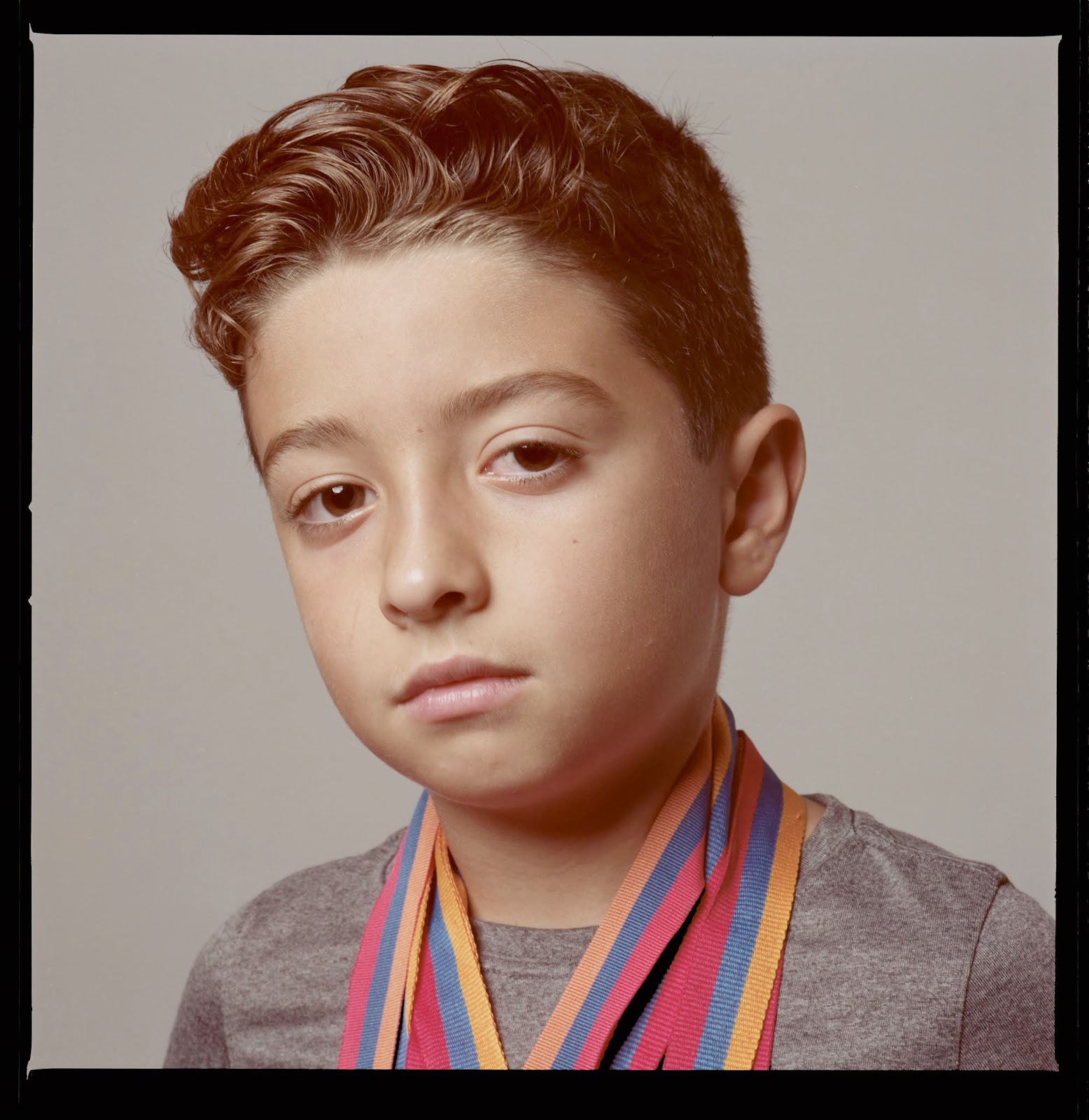
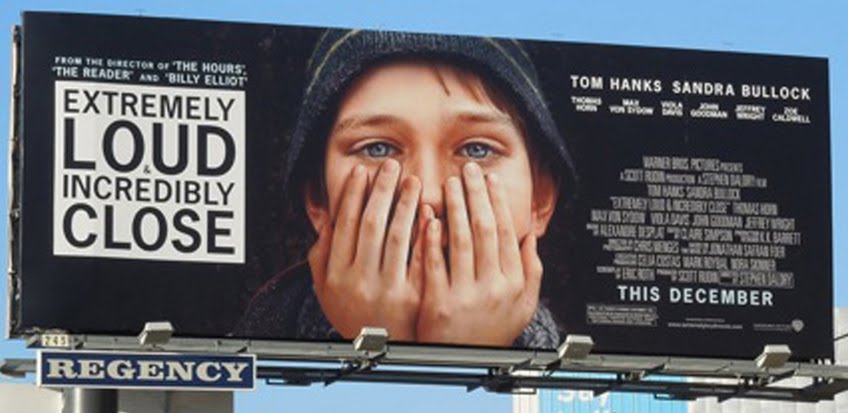
photo: extremely loud and incredibly similar/ Armenian Genocide billboard was posted in 8 locations in Hollywood one year before the movie came out. The agency that designed the advertising for the movie is in Hollywood. The similarity of the placement of the hands combined with the awkwardness of the boys hands reveals a duplication rather than an original and natural approach.
The Extremely Loud and Incredibly Close image was no doubt influenced by the Armenian Genocide billboard at the least and at the worst was a direct attempted copy.

photo: Extremely Loud and Incredibly Close billboard comparison

Tuesday, November 18, 2008

Artist Statement for Scopophilia


The inspiration to pursue the ideas behind this exhibit came about through one single image. In the tradition of Ralph Eugene Meatyard, I placed a grotesque male mask on a beautiful nude female body. The resulting combination was confusing: beauty and the beast all in one, a representation of a man realizing that he had a woman's body. Representing the ultimate "male gaze," I brought it into class for critique. After the only other male student in the class made a comment about the picture, the uproar from the women in the class took me by surprise. I knew that I had touched on a raw nerve. The comment that really pressed my direction was "how could you know how women feel?" It was true; putting myself in the position of a woman and trying to understand how she would feel was not the route to take nor had it been my original intention. So I contemplated the issue and my response was a short video entitled "my corner." I reread Laura Mulvey's essay on the Hollywood filmmaker's role in the relationship between the viewer and the objectification of the women portrayed.

I knew that I myself was an example of someone influenced by the media into believing a fantasy. Real women never seemed to fit the molds that I was led to believe in. I know that my adolescent bubble was burst when I worked as a photo assistant at Playboy Magazine and realized that photographers enhanced women's charms and hid their flaws to create idealized characters for men to fantasize about. Combined with advertising and popular culture, viewers are tricked into believing these media illusions of perfectly retouched skin and flawless bodies that compete with reality in the minds of men and women.

In his BBC series "Ways of Seeing," John Berger states that "men dream of women, but women dream of being looked at." In his book with the same title, he concludes that if women are to escape the male gaze, then a more neutral gaze must be developed, and in order to do this, everyday images must be dissected to understand the underlying forces that drive women to be "objectified spectacles."

Garry Winogrand's book, Women Are Beautiful became my inspiration. His candid images of women led me into public places to photograph through my own male gaze. I wanted to see what it was that made me look. There are many levels of and reasons for looking: curiosity, judgment, and sexual attraction are a few. My favorite places include beaches, malls, openings and conventions or large gatherings, all open to the public. Unlike women from other cultures, American women have a choice about what they wear in public. Observing that choice is what this work documents.

My reason for using a stereo camera is threefold: first, it engages the viewer in an intimate viewing arrangement, reminiscent of a "peep show;" second, stereo vision is something realized in the mind and can only be interpreted there; and finally I have developed a cataract in my right eye and am in the process of losing my stereovision. You don't know what you've got till it's gone.